Because it is more appealing to hear from the authors themselves, we’ve rounded up some of the best quotes we’ve heard this year (even if they’re a bit older) from some of our distinguished Anisfield-Wolf Award winners. Enjoy!
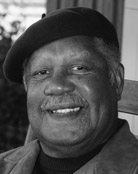
“I want you to show them the difference between what they think you are and what you can be.”
— Ernest J. Gaines, A Lesson Before Dying
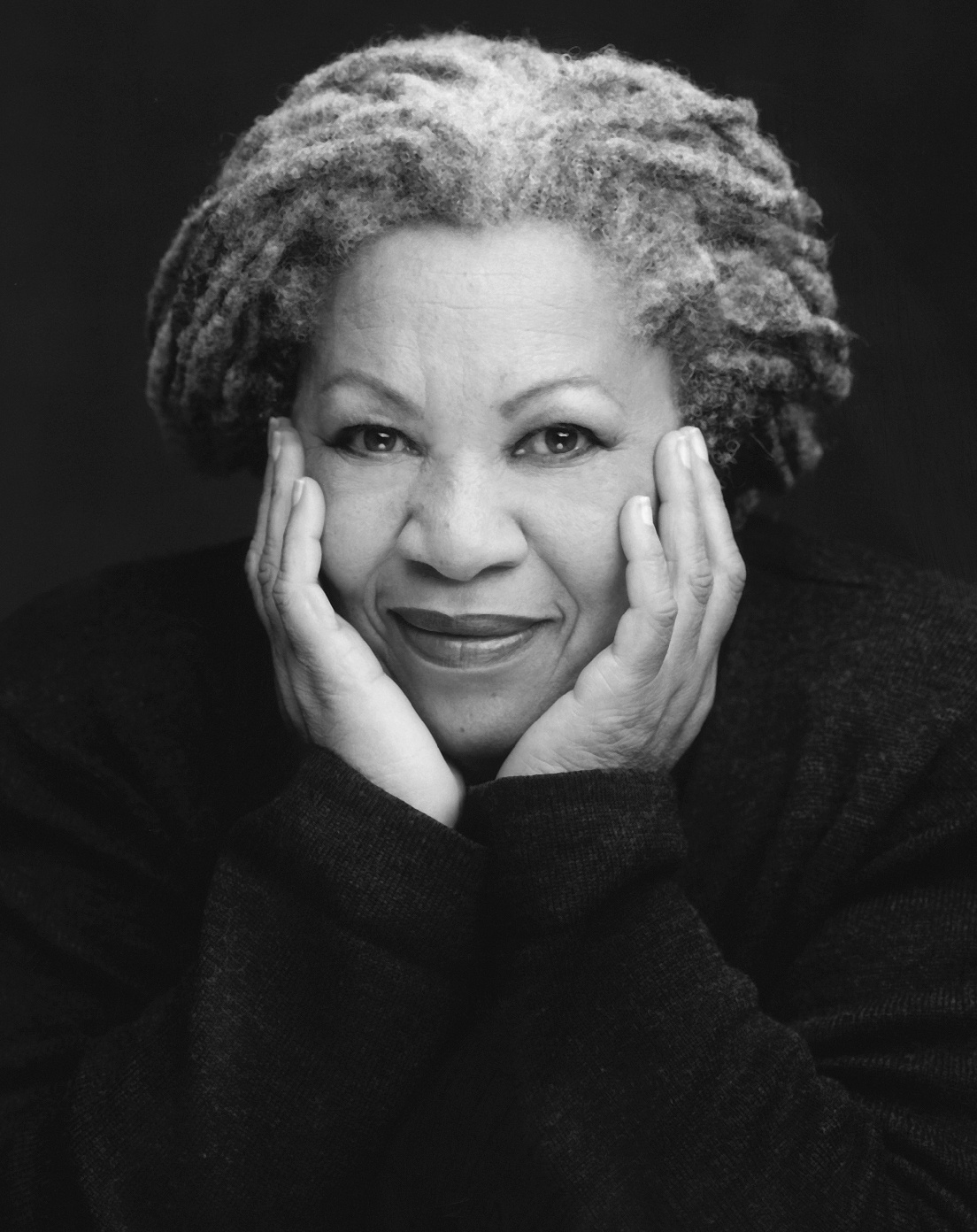
”At some point in life the world’s beauty becomes enough. You don’t need to photograph, paint or even remember it. It is enough.”
— Toni Morrison
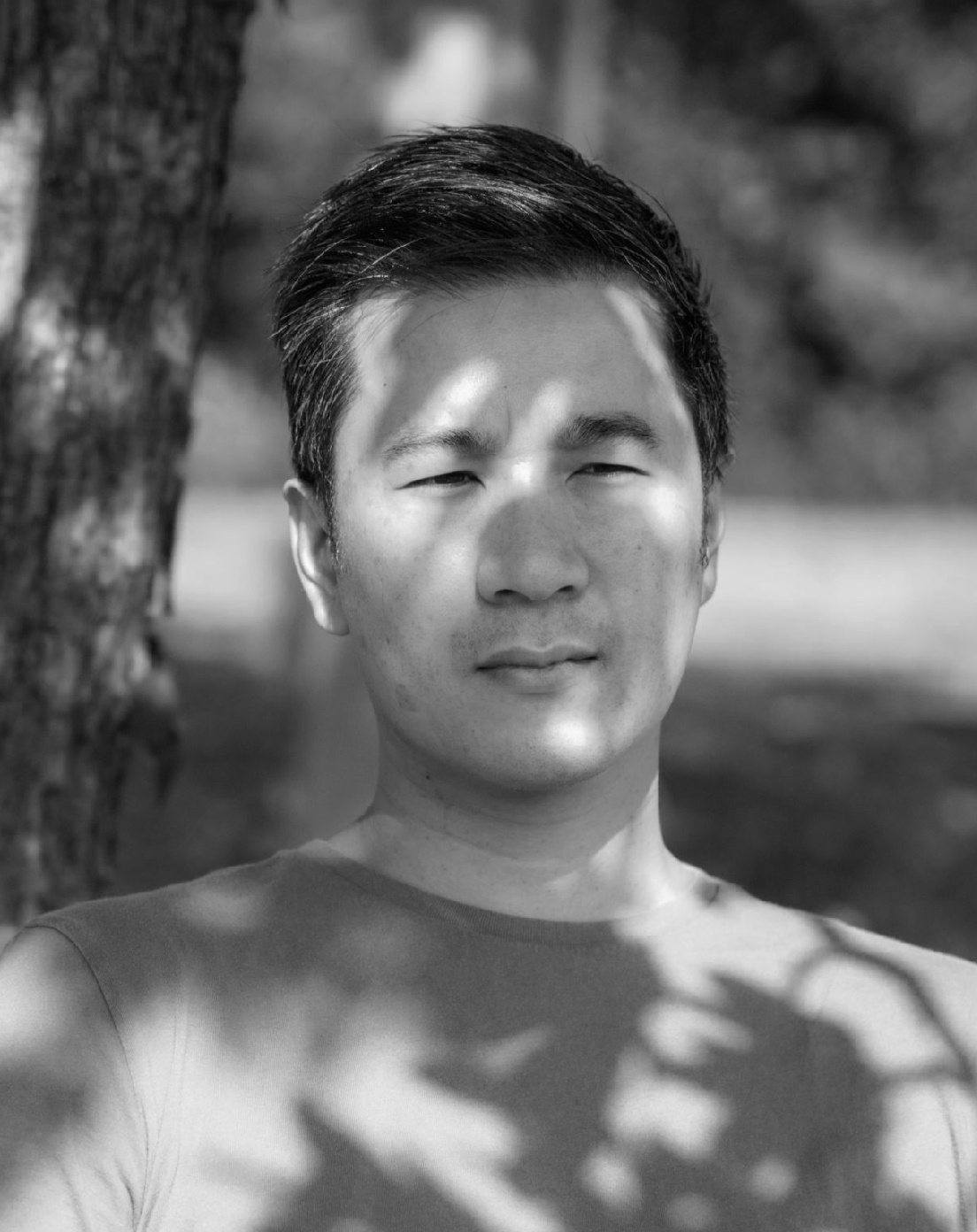
”Art, after all, is – at its best – a lie that tells us the truth.”
— Nam Le
”Poetry is what you find / in the dirt in the corner, / overhear on the bus, God / in the details, the only way / to get from here to there.”
— Elizabeth Alexander, Ars Poetica #100: I Believe
“One of the things I love about writing novels is that you realize that you’re not all that interested in the bottom. You’re more interested in things that are bottomless. You become fascinated by the questions, and the answers to those questions are secondary, if they become important at all.”
— Nicole Krauss
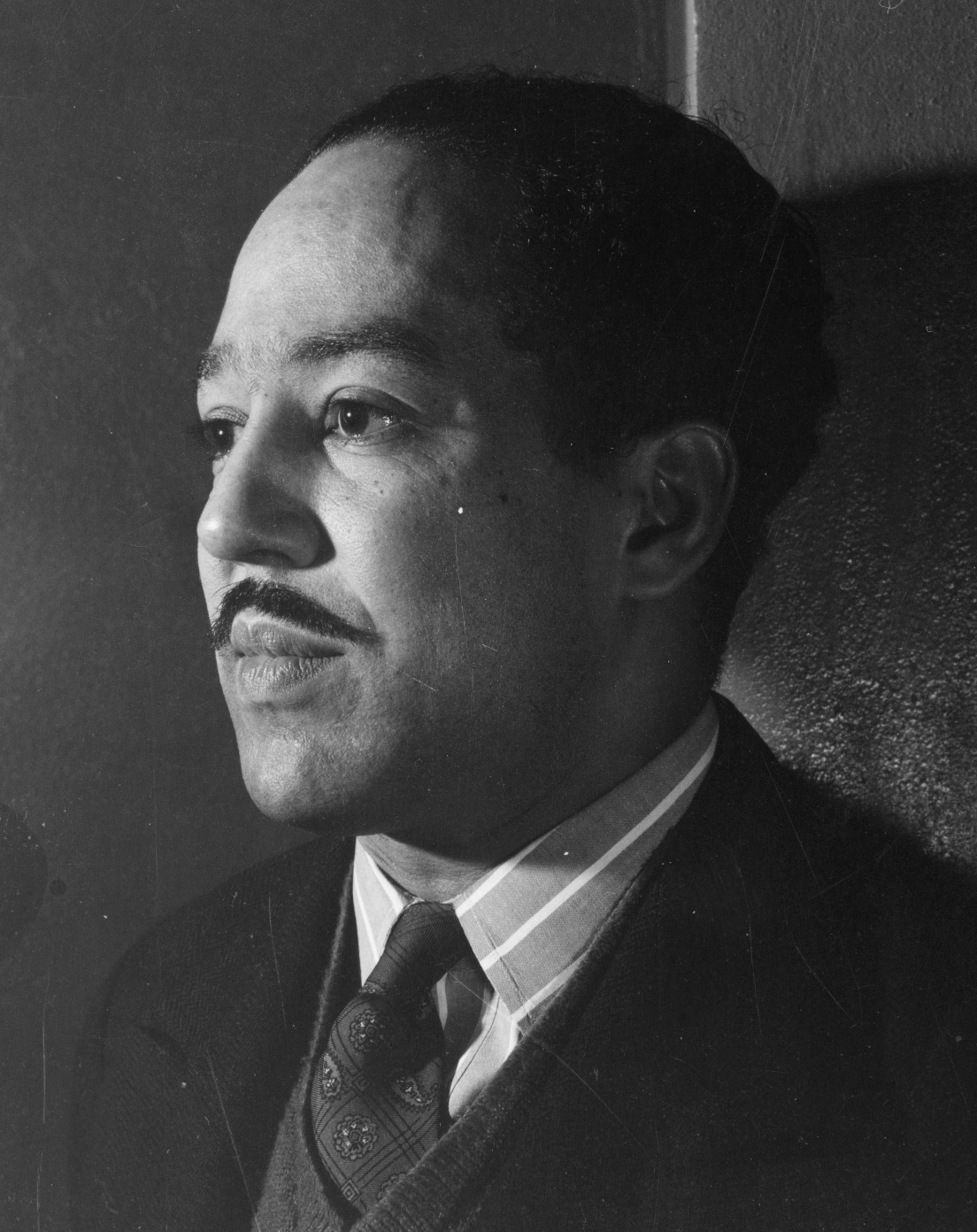
“An artist must be free to choose what he does, certainly, but he must also never be afraid to do what he might choose.”
— Langston Hughes
In the New York Times magazine’s annual “The Lives They Lived” feature, 2011 Anisfield-Wolf winner Isabel Wilkerson explores the lives of men and women who were named “the first” in her essay, A First Time For Everything:
Eugene Kingwas the first African-American milk-delivery man in the Gary, Ind., area. Eddie Kogerwas the first black bus driver in the state of South Carolina. Camillus Wilsonwas the first African-American meter reader for the Baltimore Gas and Electric Company. Nancy Hodge-Snyderwas said to have “had the distinction of being the first black registered nurse in Kalamazoo.”
I scan the list, a spreadsheet of names and obituary excerpts, and cannot stop reading. How mundane the positions were, how modest the dreams had been. Added together, they somehow bear witness to how far the country has come and how it got to where it is. They speak to how many individual decisions had to be made, how many chances taken, the anxiety and second-guessing at the precise instant that each of these people was hired for whatever humble or lofty position they sought.
“I’ve always felt one step removed from things because I’ve always felt I’ve been watching. I wasn’t entirely there. There was a part of me that was always milking details for a story…I think it’s the lot of the writer.”
— Chimamanda Ngozi Adichie, 2007 Anisfield-Wolf award winner.
https://youtube.com/watch?v=nNXS8Zv0TKk
In this series of videos from BigThink.com, 1998 Anisfield-Wolf Award winner Walter Mosley gives answers to all types of questions: What big ideas have you had lately? What’s the biggest misconception about a writer’s life? And perhaps a question every writer and aspiring writer wants to know: What is your writing routine? Get the answers to all these and more below:
Anisfield-Wolf jury chair Henry Louis Gates has a resume a mile long. And in between his work at Harvard, his successful PBS specials, among his other numerous obligations, he found time to finish “Life On These Shores: Looking At African-American History 1513-2008,” an expansive look at the experience of blacks in America from the time of arrival of the free black conquistador Juan Garrido with Ponce de León in 1513 to the election of President Obama in 2008. Gates covers subjects as diverse as NBA great Bill Russell to Malcolm X to former Secretary of State Condoleezza Rice.
The reason he’s able to write such books on such expansive topics is quite simply, his love for knowledge. In this interview with the Boston Globe, he talks about his love of reading and what books he believes everyone should pick up at least once. Check out the short excerpt below:
“Steve Jobs’’ by Walter Isaacson, which I’m loving, and “The Complete Tales of Uncle Remus’’ by Joel Chandler Harris. Most people look back at “Uncle Remus’’ and think it was racist, but people like W.E.B. Dubois in the teens and ’20s wrote about Harris as a preserver of black culture. So I’m going back to see. I just finished reading, “Freedom Papers’’ by Rebecca Scott [and Jean M. Hébrard], which traces a black woman’s family across five generations. It’s a brilliant book. I’m also reading the “Library of Congress Illustrated Timeline of the Civil War.’’ And lately I’ve been on a Faulkner kick. I read “Absalom, Absalom!’’ and “As I Lay Dying.’’ That’s what I’ve been reading on planes. The thing that Faulkner got right was the intimacy in black and white relations.
The book he’d recommend to everyone
“The Intuitionist’’ by Colson Whitehead. “Invisible Man’’ by Ralph Ellison to me is the greatest novel of that time. Rita Dove’s poetry. Anything by Jamaica Kincaid and by Toni Morrison. My favorite of hers is “Jazz.’’
For those who enjoy reading books, and enjoy sharing their favorite books with their friends even more, starting a book club amongst friends might be a great option. We’ve read many tips on starting a book club, but this post from Monica at TheYummyLife details how she’s managed to keep her book club going for 25 years.
There are lots of book clubs out there now, and there’s more than one way to run a successful one. I’ve only had experience with mine, so I’ll share how ours is organized and why I believe we’ve had such endurance. If you are in a book club and have some ideas to share, I’d love to hear from you.
1. Number of members. We’ve had as many as 18 and as few as 7 active members. You need enough regular members to allow for an absentee or two each time. It’s hard to have a good discussion with fewer than 4 or 5 people in attendance.
2. A regular meeting day and time. We have always met the first Monday of each month at 7:30 pm. That way we can reserve book club meetings on our calenders and schedule other things around them. That makes good attendance more likely. The 7:30 start gives us time to eat dinner with our families before we come.
3. Rotating hosts. We move from house to house for each meeting. We don’t plan this too far ahead, because often we don’t know our schedules more than a month ahead of time. We let members volunteer to host from month to month, and it’s casually self-monitored. I know when it’s my turn to voluteer, so I do. Every one takes her turn when it works into her schedule.
4. Email reminders. It is the host’s responsibility to send out an email reminder to the rest of the group with details about when, where, and what book has been selected for the following month. (In the “olden” days before email, we had to mail out post card reminders. Hosting got a lot easier when email came along.) We usually send out an initial reminder a month ahead, and then a second reminder a day or two before the book club meeting.
2009 Anisfield-Wolf Award winner Annette Gordon-Reed had the distinct privilege of being awarded a MacArthur “Genius” grant, which is a $500,000 prize for individuals with an exceptionally high level of creativity in their work. The grant is a no-strings-attached award, designed to let the winners continue to produce high-quality work without financial worry. Here is Annette’s video on how she began work on her book, The Hemmingses of Monticello, and what being a MacArthur Fellow means to her.
In this brief interview, Kamila Shamsie, a 2010 Anisfield-Wolf award winner, talks about the joy of reading, the upside of ebooks, and whether she considers herself a political writer. A must-listen for anyone who is a fan of her work or a fan of literature in general.
What makes a writer a writer? It’s a simple question with many possible answers and if you ask 10 authors, it’s almost guaranteed that you’ll get 10 different answers. Junot Diaz answered the question as only he can:
My novel, which I had started with such hope shortly after publishing my first book of stories, wouldn’t budge past the 75-page mark. Nothing I wrote past page 75 made any kind of sense. Nothing. Which would have been fine if the first 75 pages hadn’t been pretty damn cool.
But they were cool, showed a lot of promise. Would also have been fine if I could have just jumped to something else. But I couldn’t. All the other novels I tried sucked worse than the stalled one, and even more disturbing, I seemed to have lost the ability to write short stories. It was like I had somehow slipped into a No-Writing Twilight Zone and I couldn’t find an exit. Like I’d been chained to the sinking ship of those 75 pages and there was no key and no patching the hole in the hull. I wrote and I wrote and I wrote, but nothing I produced was worth a damn….
I was living with my fiancée at the time (over now, another terrible story) and was so depressed and self-loathing I could barely function. I finally broached the topic with her of, maybe, you know, doing something else. My fiancée was so desperate to see me happy (and perhaps more than a little convinced by my fear that maybe the thread had run out on my talent) that she told me to make a list of what else I could do besides writing. I’m not a list person like she was, but I wrote one. It took a month to pencil down three things. (I really don’t have many other skills.) I stared at that list for about another month. Waiting, hoping, praying for the book, for my writing, for my talent to catch fire. A last-second reprieve. But nada. So I put the manuscript away….
One night in August, unable to sleep, sickened that I was giving up, but even more frightened by the thought of having to return to the writing, I dug out the manuscript. I figured if I could find one good thing in the pages I would go back to it. Just one good thing. Like flipping a coin, I’d let the pages decide. Spent the whole night reading everything I had written, and guess what? It was still terrible. In fact with the new distance the lameness was even worse than I’d thought. That’s when I should have put everything in the box. When I should have turned my back and trudged into my new life. I didn’t have the heart to go on. But I guess I did….
Because, in truth, I didn’t become a writer the first time I put pen to paper or when I finished my first book (easy) or my second one (hard). You see, in my view a writer is a writer not because she writes well and easily, because she has amazing talent, because everything she does is golden. In my view a writer is a writer because even when there is no hope, even when nothing you do shows any sign of promise, you keep writing anyway. Wasn’t until that night when I was faced with all those lousy pages that I realized, really realized, what it was exactly that I am.
”I do believe that you can never know yourself let alone the person next to you let alone the person halfway across the world. Yet at the same time I believe there is nothing like fiction to fully thrust you into someone else s consciousness.”
It’s been almost 10 years since Quincy Jones won an Anisfield-Wolf Award for his book, Q: The Autobiography of Quincy Jones, but his legacy is always worth revisiting. The BBC produced a two-part series on his 50+ years in the music industry, “The Many Lives of Q,” giving viewers a chance to understand the profound influence he has had on music of every genre, from jazz to hip-hop to pop music.
2008 Anisfield-Wolf award winner Mohsin Hamid’s groundbreaking work,The Reluctant Fundamentalist, is getting the Hollywood treatment. The story follows a young Pakistani as he grapples with life after 9/11. Starring Riz Ahmed as Changez, the film will also feature Kate Hudson, Liev Schreiber, and Kiefer Sutherland. Mira Nair (The Namesake, Monsoon Wedding) will direct.
There’s always a murmur when beloved books and characters make the transition to the big screen. Devoted readers will either skip the film altogether or spend a great amount of time picking it apart in comparison to the book. But as The Reluctant Fundamentalist makes its leap into theaters, it’s worth noting that Hamid took it upon himself to create a novel that was especially inviting for readers to create their own vibrant connection to the story. As he wrote earlier this year in a piece for The Guardian:
“I began to wonder if the power of the novel, if its distinctive feature among contemporary mass-storytelling forms, was rooted in the enormous degree of co-creation it requires on the part of its audience. (After all, when you watch a film or TV show, what you see looks like what it represents; when you read a novel, what you see is black ink on pulped wood, and it is you who projects scenes on to the screen of your imagination.)
If the novel was special because it allowed writers and readers to create jointly, to dance together, then it seemed to me that I should try to write novels that maximized this possibility of opening themselves up to being read in different ways, to involving the reader as a kind of character, indeed as a kind of co-writer.”
The Reluctant Fundamentalist is due to hit theaters in 2013.
2005 Anisfield-Wolf Award winner Edwidge Danticat gets emotional after receiving the Langston Hughes medal at the 2011 Langston Hughes Festival, celebrating writers from the African diaspora. Past winners of the Langston Hughes medal include Paule Marshall, Toni Morrison, Ralph W. Ellison, August Wilson, and Derek Walcott—all Anisfield-Wolf Award winners as well! As Danticat said during her emotional acceptance speech, “My life, for reasons that only the universe fully understands has been one in which I always feel I am walking in the footsteps and on the shoulders of giants.” Congratulations to Ms. Danticat for a well-deserved honor!
In the video below she talks about the history and the power of storytelling in Haitian culture and talks about her new book, “Create Dangerously: The Immigrant Artist at Work.”
The world of publishing is changing right before our eyes, with established authors choosing to go the self-publishing route. Anisfield-Wolf’s very own John Edgar Wideman chose to self-publish his collection of short stories, Briefs, with Lulu.com in 2010. Check out this video of young actor Theron Cook giving a steady performance of one of his stories, “Bananas.”
David Eltis, Woodruff Professor of History at Emory University, along with his co-author David Richardson, has complied one of the most exhaustive works on the subject of the Atlantic slave trade. Their ground-breaking work was turned into the website, www.SlaveVoyages.org, where visitors can get estimates of the slave trade, research African names, and get detailed maps regarding the passage of slaves from one country to another. Check out this short clip for more information on the project.
Thinking about picking up a book from one of the 2011 Anisfield-Wolf winners? Check out this brief reading from Mary Helen Stefaniak and see if her 2010 novel, The Cailiffs of Baghdad, Georgia, might make its way onto your Christmas list.
2011 Anisfield-Wolf Award winner Nicole Krauss, honored for her 2010 novel Great House, was selected as one of 12 honorees of USA Network’s Character Approved award. Here she speaks in this short clip about her approach to writing and how she doesn’t view it as simply putting words to paper, but rather, it’s more like architecture.
In this brief interview from Knopf’s “Writers on Writing” series, 2011 Anisfield-Wolf winner Isabel Wilkerson discusses the lengthy, grueling process of writing her award-winning book, The Warmth of Other Suns. She says, “I am so glad that I didn’t know it would take 15 years. Had I know it would take 15 years, I don’t think I would have embarked upon it.”
Good evening. I’m Ronn Richard, president and CEO of the Cleveland Foundation. It’s my great pleasure to welcome you to the 76th annual Anisfield-Wolf Book Awards ceremony.
I can’t tell you how thrilling it is to see a full house for our opening night here in Playhouse Square.We will always think back upon our years at the Cleveland Play House with nostalgia. But the change in venue didn’t slow demand for almost 1,000 tickets, most of which were snapped up the first week. That’s a testament to the respect this prize commands – and to you. Never let it be said that any group anywhere can out-read Clevelanders!
I want to extend a special greeting to our internet audience. We’re streaming our ceremony live, thanks to a collaboration between Playhouse Square and Ideastream.The webcast will be posted on our retooled website, www.Anisfield-Wolf.org, which I urge you to check out. Also be sure to visit our new Twitter feed, YouTube channel, and Facebook page. I think you’ll be amazed at what you see.
The revamped site is a bookworm’s delight. You’ll find information on every winning title and author dating back to the first award in 1936. You’ll be able to access data you could never get before. If you want to know which winners have Pulitzer prizes or MacArthur fellowships, it’s right there at your fingertips.On our new blog, you can submit questions and comments as well. Whatever you want to do, it’s easy. We’re very excited about this upgrade, and we think you will be, too.
Introduction of Poet
For the last three years, we’ve celebrated not only our winning authors, but also an emerging young poet from our own backyard. This recent tradition continues tonight with Essence Cain, a sixth-grade student at Miller South School for Visual and Performing Arts, just down the road in Akron.
Essence will recite a poem she and her classmates wrote for “Speak Peace,”an international youth arts program created by Kent State University’s Wick Poetry Center. American children in the program wrote poems in response to paintings created by Vietnamese children.
You’ll see tonight’s poem and the painting that inspired it on the screen behind us. They’re part of an exhibit currently touring the United States. It’s my pleasure to present Essence Cain with “In the Flower Market.”
Thank you, Essence. Your parents, Terri and Doran, and your mentor, Nicole Robinson, are here tonight, and I’m pretty sure you’ve made them the proudest people in the room. Please join me in another round of applause for Essence and for the classmates she so ably represents.
Introductory Remarks
We gather here tonight, just days after the 10-year remembrance of one of the most villainous crimes in recent history, perpetrated against our nation and humanity – a mass murder that wiped out almost 3,000 innocent lives in less than two hours. I’m sure that for you as for me, the commemorative events of recent days reawakened the shock and horror we all felt as the smoke and debris from the collapsed Twin Towers blotted out the sun on what had begun as a picture-perfect day.
Back then, as details of the hijackers and their plot emerged, a simple question formed in our minds: How could anyone hate that much? Regrettably, the years since have shown that the hijackers and their co-conspirators had no monopoly on hatred.
Think about it: On September 10, 2001 – when most Americans had yet to become acquainted with Al-Qaeda and Osama bin Laden – could any of us have foreseen the intensity of anti-Islamic sentiment that we struggle with to this day?
The bitter fruit of this harvest of hate is all around us. On this side of the Atlantic, it surfaces whenever some publicity-driven zealot threatens to burn the Koran, or some shameless politician spews sinister warnings of a stealth campaign to establish an Islamic Republic of America. Meanwhile, across Europe, violence flares. It would be far too simplistic to blame this summer’s street riots in Britain on multiculturalism, as some have done.
But few would argue that immigration has stoked popular fears and strident political rhetoric aimed at Muslims in particular. Bigotry and intolerance poison our airwaves. Each day, we’re bombarded with decidedly uncivil discourse that seeks to divide and discriminate according to race, ethnicity, religion, sexual preference, political affiliation, even physical and cognitive ability.
These are the human rights issues of our time, here and now. We can trace their evolution through the Anisfield-Wolf Book Awards. In earlier decades, the winning titles dealt largely with racial injustice and anti-Semitism in America and Europe – topics that will never lose their relevance. But in the last 15 years – and post-9-11 in particular – new voices have joined the chorus. They bring different experiences and perspectives that mirror the diversity of today’s global society. Thus, we get glimpses of the world through the eyes of immigrant and first-generation authors who trace their ancestry to Mexico, Puerto Rico, Haiti, the Dominican Republic, Pakistan, Vietnam, Somalia, and Nigeria.
I think this inclusiveness would please Edith Anisfield Wolf. Edith loved literature, and she saw it as a catalyst to spark dialogue, which she believed was essential to bridging distrust and misunderstanding. In our contentious society, where opposing sides compete to shout each other down, Edith inspires us with her quiet, steadfast belief in the power of the written word to help shape a better world.
Taylor Branch, winner of an Anisfield-Wolf prize and a lifetime achievement award, put it far more eloquently than I could when he said, and I quote: “The Anisfield-Wolf Book Awards … summon minds and hearts to ponder the relationship of human beings to those perceived as ‘the other.’ No purpose opens such vast heartache, and abiding hope, in the cause of democratic justice for our world.”
Edith’s vision endures. Now, it’s up to us to confront the prejudices that define our own times. Whether the current controversy is about the siting of a mosque, the accessibility of a public venue, a promotion denied due to sexual orientation, or yet another throwback to Jim Crow, the question our inner voice should be posing is: “Where is the Edith in me?”
Introduction of Guests and Winners
Before yielding the podium, I’d like to recognize a few special guests.
I’d like to salute Charles Bolton, the deeply dedicated chair of the Cleveland Foundation’s Board of Directors, and all current and past board members who are here tonight. Please stand and accept the community’s thanks for your outstanding service.
Finally, I have the great honor of sharing the stage with one of Cleveland’s leading ladies, in every sense of the phrase: Dee Perry, senior host and producer of WCPN’s daily magazine talk show, “Around Noon.” If you’ve spent any time around Cleveland, you know Dee. Her soothing voice has graced the local broadcasting scene since 1976. She’s made her radio home at WCPN, Cleveland’s public radio station, since 1989. Radio isn’t her only medium. Dee also hosts and produces “Applause,” the weekly arts and culture series on WVIZ/PBS.
Yesterday, we learned that our Anisfield-Wolf jury chair, Dr. Henry Louis Gates Jr. of Harvard University, was ill and would be unable to travel here to serve as our emcee, a role he has filled the past eight years. We needed a pro, and we needed one now. We immediately thought of Dee, who has long been a rock-solid supporter of this event. She graciously agreed to step in – and added that she was thrilled to have the opportunity. Dee, we are just as thrilled to have you up here. Welcome to the Anisfield-Wolf stage, and thank you.
Earlier this year, Dr. Gates and four nationally renowned jurors reviewed more than 200 submitted works before selecting just four that they deemed worthy of the prize. Tonight, we will listen to and celebrate the 2011 Anisfield-Wolf honorees:
Now, here to tell you more about tonight’s winners, ladies and gentlemen, please join me in greeting tonight’s emcee, Dee Perry.
Acknowledgments
Thank you, Dee. To all six of our 2011 honorees, thank you for inspiring us with the beauty of your language, the rigor of your research, and your commitment to your craft. You’ve given us an unforgettable evening. I think our jury has outdone itself again. In addition to Skip Gates, this amazing group includes Rita Dove, Joyce Carol Oates, Steven Pinker, and Simon Schama. Our thanks to them for helping us sustain the legacy of a cherished daughter of Cleveland: Edith Anisfield Wolf.
I also want to acknowledge Mary Louise Hahn, the prime mover behind this event. Each year, she brings her passion for literature, her deep knowledge of the prize’s heritage, and her delightful sense of humor to steer us to safe harbor. Mary Louise, please stand and be recognized. Mary Louise would be the first to say she gets by with a little help from her friends. Thanks to the Cleveland Foundation board and staff, with a special nod to Cindy Schulz, Elizabeth McIntyre, and Terry Pederson of our Public Affairs team.
We’re fortunate to partner with some first-class organizations that have rallied around this event. To begin, many thanks to Playhouse Square for accommodating us this evening. We value our close tie with the Baker-Nord Center for the Humanities at Case Western Reserve University, where David Eltis and David Richardson lectured yesterday. Afterward, the center hosted a reception for them and for Lisa Nielson, the first Anisfield-Wolf/SAGES fellow, who will lead several classes dedicated to issues of race and diversity. Welcome to Cleveland, Lisa. We’re so pleased to have you here. For many years, we’ve enjoyed strong support from the Cuyahoga County Public Library and the Cleveland Public Library, which houses the complete collection of Anisfield-Wolf winners. A Cultural Exchange is our hard-working, award-winning book sale partner.
Now, it’s my pleasant duty to present our honorees with their 2011 Anisfield-Wolf Book Awards. In addition to a monetary stipend, each winner receives a signature glasswork hand-crafted exclusively for the Anisfield-Wolf Book Awards by the artisans of Streets of Manhattan, a creative glass studio in Cleveland. Our winners’ glass mementos reflect the colors of their book jackets.
Please stand for a final round of applause as our honorees receive their prizes.Thank you for being here tonight. We hope to see you again next year. Please travel safely.
Since 2009, an emerging young poet from Northeast Ohio is celebrated along with the winning authors at the Anisfield-Wolf Book Awards ceremony in Cleveland.
At the 2011 ceremony, Essence Cain, a sixth-grader at Miller South School for Visual and Performing Arts in Akron, Ohio, recited “In the Flower Market,” a poem she and her classmates wrote for “Speak Peace,” an international youth arts program created by Kent State University’s Wick Poetry Center. American children in the program wrote poems in response to paintings created by Vietnamese children. The exhibit of paintings and poems is traveling nationally through 2013.
Essence has appeared in plays and musicals at venues throughout Ohio. She was a contributing writer and reader for the animated e-greetings of the 2009 Traveling Stanzas series, Peace Stanzas. She has performed poetry with the Wick Poetry Center Outreach program at the 2011 Virginia Hamilton Conference at Kent State University and the Association of Writers and Writing Programs national conference in Washington D.C. in 2011.
In the Flower Market
Tiger lilies roar in the cold April rain.
Tulips seek friends with their spray of pollen.
Sunflowers flash in the night,
Illuminating the world like a candle.
Bluebells drip with dew—
They love just being themselves.
Marigolds sing, mango trees ding.
Orchids fly like birds in the wind.
Flowers from all over the world
Spread their colors like peacocks.