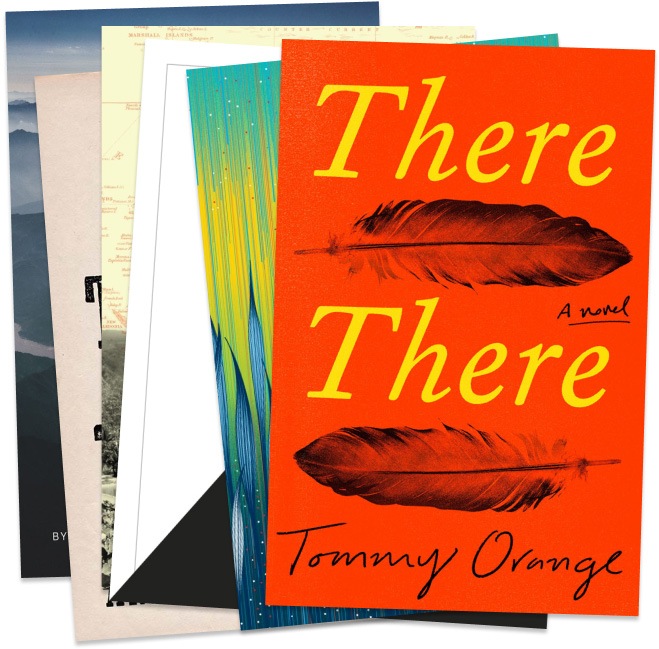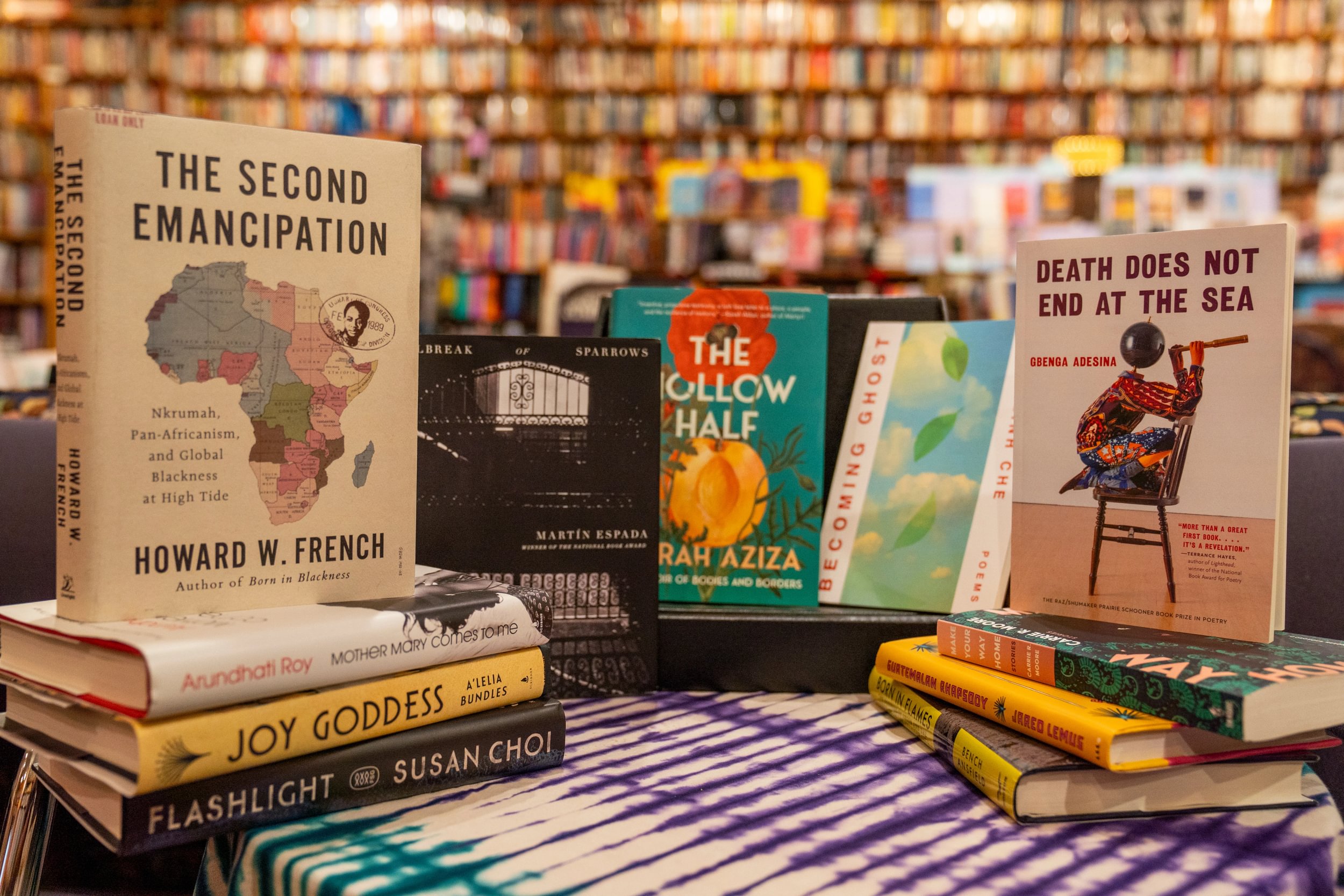
This year our jury selected 11 incredible books as finalists for the Anisfield-Wolf Book Awards. Learn more about this year’s finalists with descriptions from their publishers before we announce our winners on April 15.
Death Does Not End At The Sea by Gbenga Adesina
University of Nebraska Press, 2025
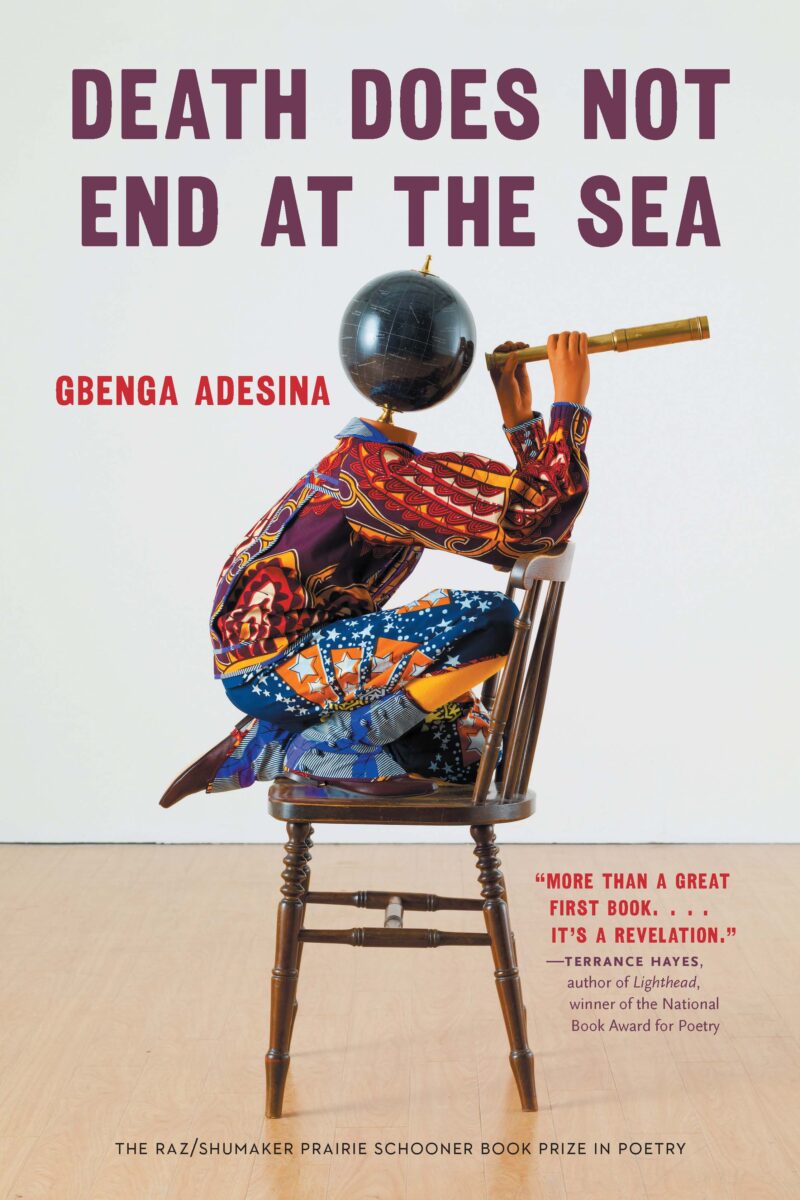
In Gbenga Adesina’s groundbreaking debut book of poems, a defiant and wise exploration of exile, voyages, and spiritual odysseys, we encounter figures embarking on journeys haunted by history—a son keeps dreaming he carried his dead father across the sea; a young Black father, tired of fear and breathlessness, travels with his son in search of the ghost of James Baldwin—to Paris, the south of France, Turkey, and Senegal to investigate his ancestral roots; and finally, a group of immigrants on small boats in the middle of the Mediterranean Sea sing in order not to drown, in a stunning sequence that invokes the middle passage. In a lyrical voice at once new and surprisingly ancient, Adesina’s Death Does Not End at the Sea explores the complexity of elusive citizenship, an immigrant’s brokenhearted prayer for a new beginning, a chorus of elegies, and a cosmic love song between the living and the dead.
Born in Flames: The Business of Arson and the Remaking of an American City by Bench Ansfield
W.W. Norton & Company, 2025
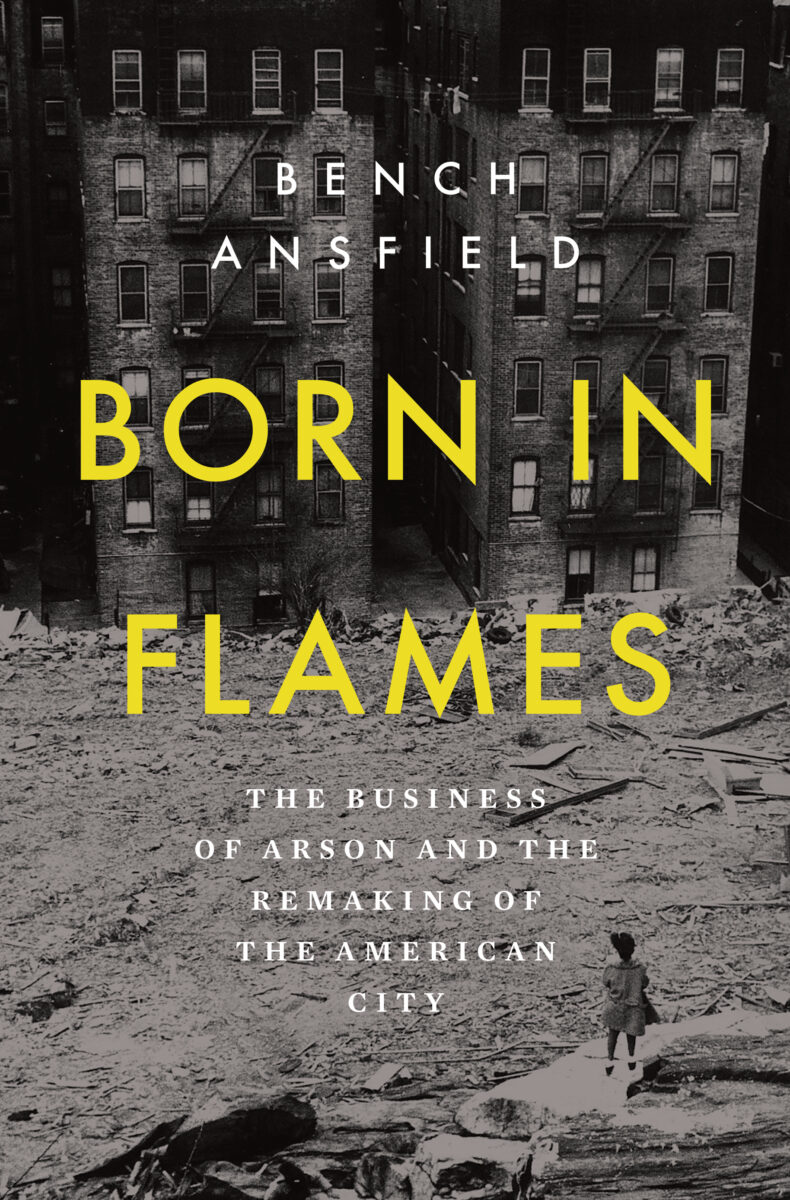
The explosive account of the arson wave that hit the Bronx and other American cities in the 1970s—and its legacy today.
“Ladies and gentlemen, the Bronx is burning!” That legendary and apocryphal phrase, allegedly uttered by announcers during the 1977 World Series as flames rose above Yankee Stadium, seemed to encapsulate an entire era in this nation’s urban history. Across that decade, a wave of arson coursed through American cities, destroying entire neighborhoods home to poor communities of color.
Yet as historian Bench Ansfield demonstrates in Born in Flames, the most destructive fires were not set by residents, as is commonly assumed, but by landlords looking to collect insurance payouts. Driven by perverse incentives—new government-sponsored insurance combined with tanking property values—landlords hired “torches,” mostly Black and Brown youth, to set fires in the buildings, sometimes with people still living in them. Tens of thousands of families lost their homes to these blazes, yet for much of the 1970s, tenant vandalism and welfare fraud stood as the prevailing explanations for the arson wave, effectively indemnifying landlords.
Ansfield’s book, based on a decade of research, introduces the term “brownlining” for the destructive insurance practices imposed on poor communities of color under the guise of racial redress. Ansfield shows that as the FIRE industries—finance, insurance, and real estate— eclipsed manufacturing in the 1970s, they began profoundly reshaping Black and Brown neighborhoods, seeing them as easy sources of profit. At every step, Ansfield charts the tenant-led resistance movements that sprung up in the Bronx and elsewhere, as well as the explosion of popular culture around the fires, from iconic movies like The Towering Inferno to hit songs such as “Disco Inferno.” Ultimately, they show how similarly pernicious dynamics around insurance and race are still at play in our own era, especially in regions most at risk of climate shocks.
The Hollow Half: A Memoir of Bodies and Borders by Sarah Aziza
Catapult, 2025
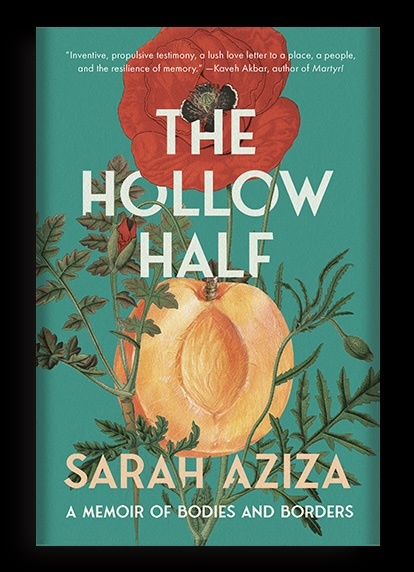
A brush with death. An ancestral haunting. A century of family secrets. Sarah Aziza’s searing, genre-bending memoir traces three generations of diasporic Palestinians from Gaza to the Midwest to New York City—and back
“You were dead, Sarah, you were dead.” In October 2019, Sarah Aziza, daughter and granddaughter of Gazan refugees, is narrowly saved after being hospitalized for an eating disorder. The doctors revive her body, but it is no simple thing to return to the land of the living. Aziza’s crisis is a rupture that brings both her ancestral and personal past into vivid presence. The hauntings begin in the hospital cafeteria, when a mysterious incident summons the familiar voice of her deceased Palestinian grandmother.
In the months following, as she responds to a series of ghostly dreams, Aziza unearths family secrets that reveal the ways her own trauma and anorexia echo generations of violent Palestinian displacement and erasure—and how her fight to recover builds on a century of defiant survival and love. As she moves towards this legacy, Aziza learns to resist the forces of colonization, denial, and patriarchy both within and outside her.
Weaving timelines, languages, geographies, and genres, The Hollow Half probes the contradictions and contingencies that create “nation” and “history.” Blazing with honesty, urgency, and poetry, this stunning debut memoir is a fearless call to imagine both the self and the world anew.
Joy Goddess: A’Lelia Walker and the Harlem Renaissance by A’Lelia Bundles
Simon & Schuster, Scribner Books (Imprint) 2025
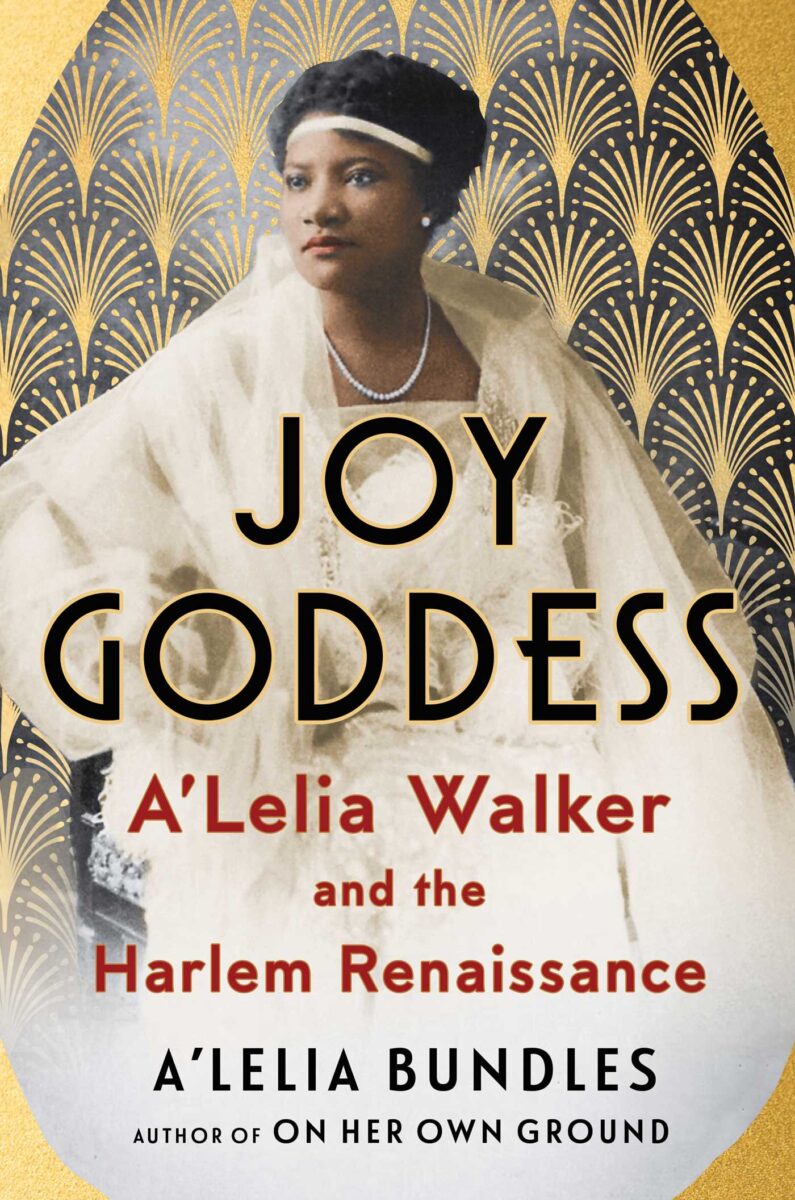
A vibrant, deeply researched biography of A’Lelia Walker—daughter of Madam C.J. Walker and herself a central figure of the Harlem Renaissance—written by her great-granddaughter.
Dubbed the “joy goddess of Harlem’s 1920s” by poet Langston Hughes, A’Lelia Walker, daughter of millionaire entrepreneur Madam C.J. Walker and the author’s great-grandmother and namesake, is a fascinating figure whose legendary parties and Dark Tower salon helped define the Harlem Renaissance.
After inheriting her mother’s hair care enterprise, A’Lelia would become America’s first high profile black heiress and a prominent patron of the arts. Joy Goddess takes readers inside her three New York homes—a mansion, a townhouse, and a pied-a-terre—where she entertained Langston Hughes, Zora Neale Hurston, Paul Robeson, Florence Mills, James Weldon Johnson, Carl Van Vechten, W.E.B. DuBois, and other cultural, social and intellectual luminaries of the Roaring Twenties.
Now, based on extensive research and Walker’s personal correspondence, her great-granddaughter creates a meticulous, nuanced portrait of a charismatic woman struggling to define herself as a wife, mother, and businesswoman outside her famous mother’s sphere. In Joy Goddess, A’Lelia’s radiant personality and impresario instincts—at the center of a vast, artistic social world where she flourished as a fashion trendsetter and international traveler—are brought to vivid and unforgettable life.
Becoming Ghost by Cathy Linh Che
Simon & Schuster, Atria Books/Washington Square Press (imprint), 2025
The long-awaited second poetry collection by award-winning writer Cathy Linh Che on familial estrangement, the Vietnam War, and Francis Ford Coppola’s Apocalypse Now.
The follow-up to her acclaimed poetry debut, Split, Becoming Ghost details the lives of refugees who escaped the Vietnam War and were utilized as extras in Francis Ford Coppola’s film Apocalypse Now. This poetry collection uses persona, speculation, and the golden shovel form as a means of centering Vietnamese voices. The speaker’s disownment raises questions about power, art, and the meaning of forgiveness.
Flashlight by Susan Choi
Farrar, Straus and Giroux, 2025
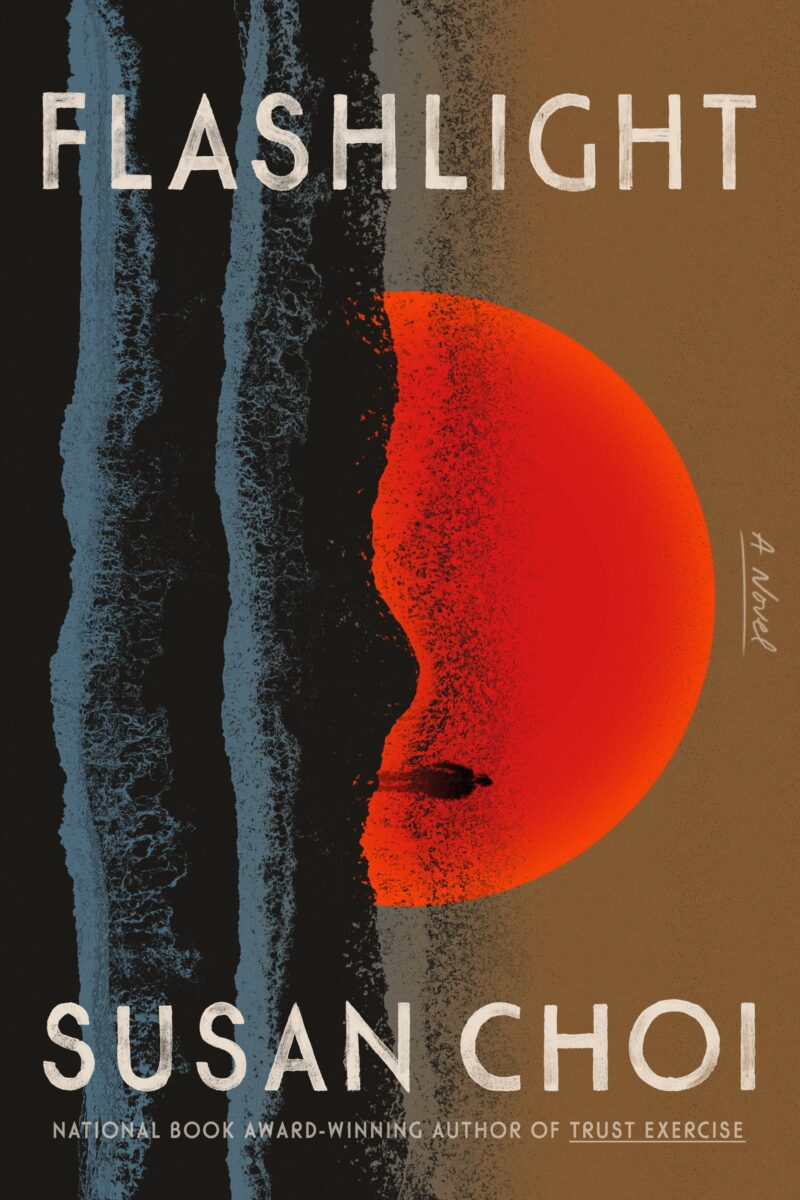
A novel tracing a father’s disappearance across time, nations, and memory, from the author of Trust Exercise.
One summer night, Louisa and her father take a walk on the breakwater. Her father is carrying a flashlight. He cannot swim. Later, Louisa is found on the beach, soaked to the skin, barely alive. Her father is gone. She is ten years old.
Louisa is an only child of parents who have severed themselves from the past. Her father, Serk, is Korean, but was born and raised in Japan; he lost touch with his family when they bought into the promises of postwar Pyongyang and relocated to North Korea. Her American mother, Anne, is estranged from her Midwestern family after a reckless adventure in her youth. And then there is Tobias, Anne’s illegitimate son, whose reappearance in their lives will have astonishing consequences.
But now it is just Anne and Louisa, Louisa and Anne, adrift and facing the challenges of ordinary life in the wake of great loss. United, separated, and also repelled by their mutual grief, they attempt to move on. But they cannot escape the echoes of that night. What really happened to Louisa’s father?
Shifting perspectives across time and character and turning back again and again to that night by the sea, Flashlight chases the shock waves of one family’s catastrophe, even as they are swept up in the invisible currents of history.
A monumental new novel from the National Book Award winner Susan Choi, Flashlight spans decades and continents in a spellbinding, heart-gripping investigation of family, loss, memory, and the ways in which we are shaped by what we cannot see.
Jailbreak of Sparrows by Martín Espada
Tin House, 2025
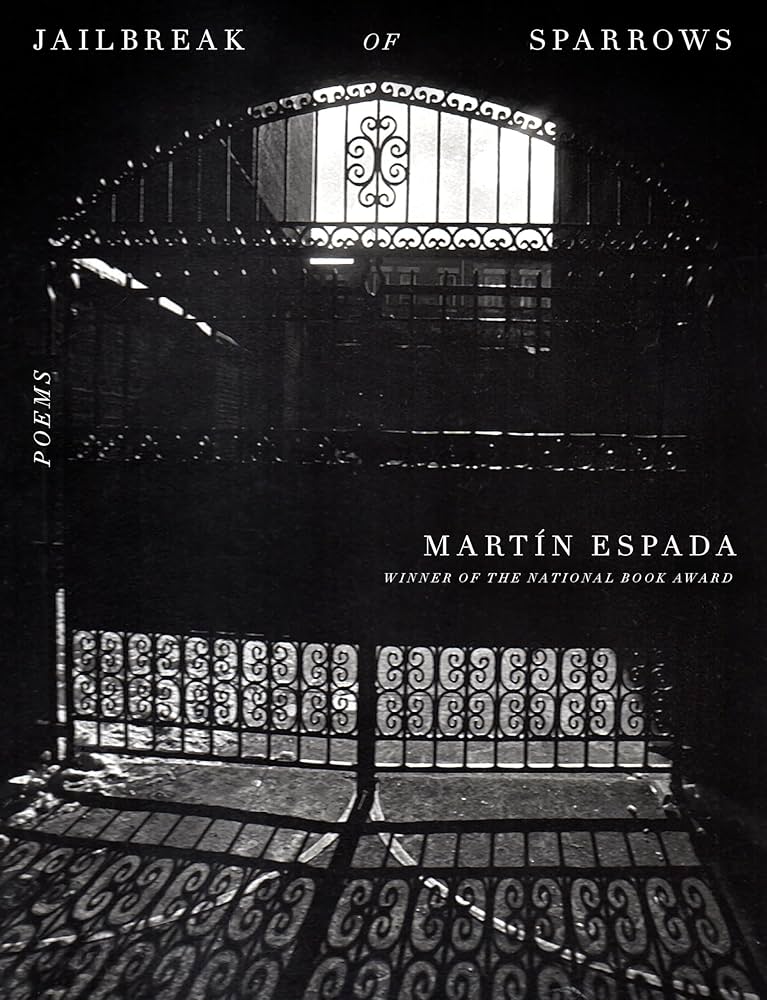
The poems in Jailbreak of Sparrows reveal the ways in which the ordinary becomes monumental: family portraits, politically charged reports, and tributes to the unsung. Espada’s focus ranges from the bombardment of his family’s hometown in Puerto Rico amid an anti-colonial uprising to the murder of a Mexican man by police in California, from the poet’s adolescent brawl on a basketball court over martyred baseball hero Roberto Clemente to his unorthodox methods of representing undocumented migrants as a tenant lawyer. We also encounter “love songs” to the poet’s wife from a series of unexpected voices: a bat with vertigo, the polar bear mascot for a minor league ballclub, a disembodied head in a jar.
Jailbreak of Sparrows is a collection of arresting poems that roots itself in the image, the musicality of language, and the depth of human experience. “Look at this was all he said, and all he had to say,” the poet says about his father, a photographer who documented his Puerto Rican community in Brooklyn and beyond. The poems of Martín Espada tell us: Look.
The Second Emancipation: Nkrumah, Pan-Africanism, and Global Blackness at High Tide by Howard W. French
W.W. Norton & Company, Liveright Publishing (Imprint) 2025
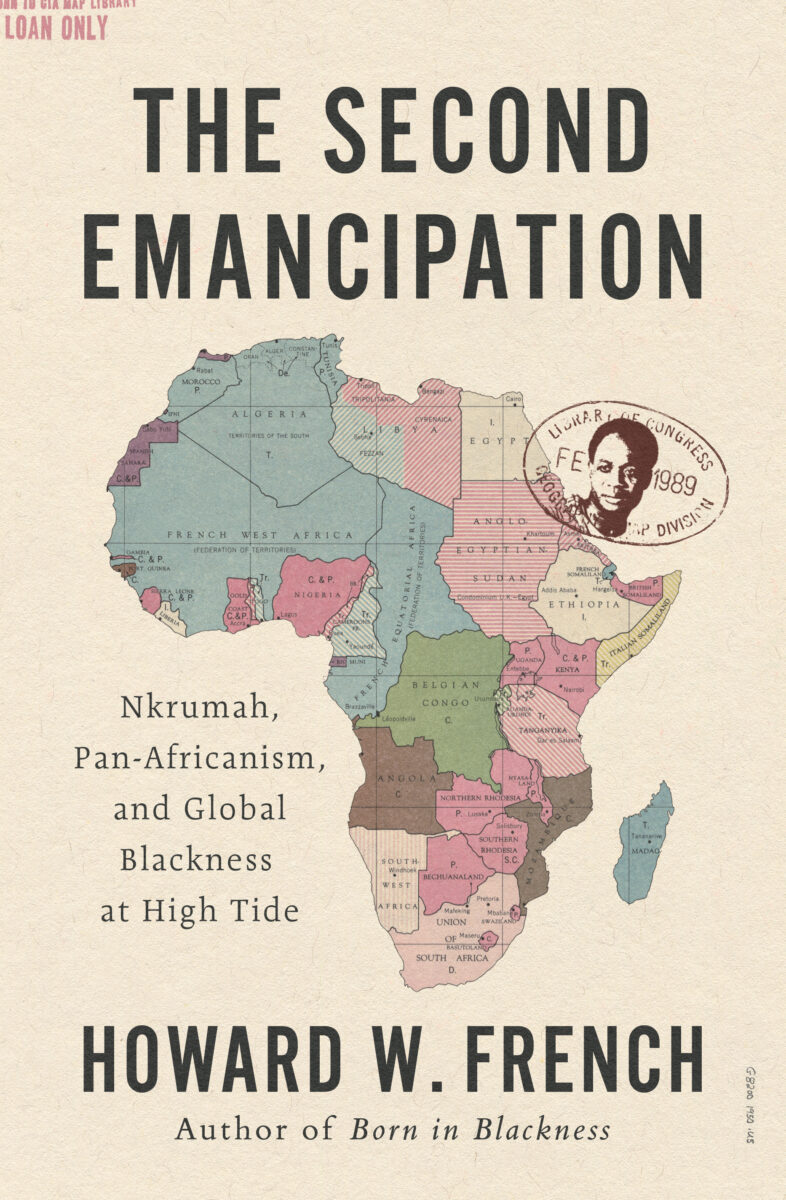
The Second Emancipation, the second work in a trilogy from best-selling author Howard W. French about Africa’s pivotal role in shaping world history, underscores Adam Hochschild’s contention that French is a “modern-day Copernicus.” The title—referring to a brief period beginning in 1957 when dozens of African colonies gained their freedom—positions this liberation at the center of a “movement of global Blackness,” with one charismatic leader, Kwame Nkrumah (1909–1972), at its head.
That so few people today know about Nkrumah is an omission that French demonstrates is “typical of our deliberate neglect of Africa’s enormous role in the birth of the modern world.” Determined to re-create Nkrumah’s life as “an epic twentieth-century story,” The Second Emancipation begins with his impoverished, unheralded birth in the far-western region of Ghana’s Gold Coast. But blessed with a deep curiosity, a young Nkrumah pursued an overseas education in the United States. Nowhere is French’s consummate style more vivid than in Nkrumah’s early years in Depression-era America, especially in his mesmerizing portrait of a culturally effervescent Harlem that Nkrumah encountered in 1935 before heading to college. During his student years in Pennsylvania and later as an activist in London, Nkrumah became steeped in a renowned international Black intellectual milieu—including Du Bois, Garvey, Fanon, Padmore, and C.L.R. James, who called him “one of the greatest political leaders of our century”—and formed an ideology that readied him for an extraordinarily swift and peaceful rise to power upon his return to Ghana in 1947.
Four years later, in a political landslide he engineered while imprisoned, Nkrumah stunned Britain by winning the first general election under universal franchise in Africa, becoming Ghana’s first independent prime minister in 1957. As leader of a sovereign nation, Nkrumah wielded his influence to promote the liberation of the entire continent, pushing unity as the only pathway to recover from the damages of enslavement and subjugation. By the time national military and police forces, aided by the CIA, overthrew him in 1966, Nkrumah’s radical belief in pan-African liberation had both galvanized dozens of nascent African states and fired a global agenda of Black power.
In its dramatic recasting of the American civil rights story and in its tragic depiction of a continent that once exuded all the promise of a newly won freedom, The Second Emancipation becomes a generational work that positions Africa at the forefront of modern-day history.
Guatemalan Rhapsody by Jared Lemus
HarperCollins, Ecco (imprint), 2025
A vibrant debut story collection masterfully moving between sharp wit and profound tenderness, and a kaleidoscopic portrait of an ever-changing country.
Ranging from a custodian at an underfunded college to a medicine man living in a temple dedicated to San Simon, the patron saint of alcohol and cigarettes, the characters in Guatemalan Rhapsody find themselves at defining moments in their lives, where sacrifices may be required of them, by them, or for them.
In “Saint Dismas,” four orphaned brothers pose as part of a construction crew, stopping cars along the highway and robbing anyone stupid enough foolish enough to hit the brakes. In “Heart Sleeves,” two wannabe tattoo artists take part in a contest, where one of them hopes to win not only first place but also the heart of his best friend’s girlfriend. And, in “Fight Sounds,” a character who fancies himself a Don Juan is swept up in the commotion of an American film crew shooting a movie in his tiny town, until the economic and sexual politics of the place are turned on their heads.
Guatemalan Rhapsody explores how we journey from the circumstances that forge us and whether the ability to change our fortunes lies in our own hands or in those of another. Revealing the places where beauty, desperation, love, violence, and hope exist simultaneously, Jared Lemus’s poignant, unflinching debut establishes him as a major new voice in the form.
Make Your Way Home by Carrie R. Moore
Tin House, 2025
In eleven stories that span Florida marshes, North Carolina mountains, and Southern metropolitan cities, Make Your Way Home follows Black men and women who grapple with the homes that have eluded them. A preteen pregnant alongside her mother refuses to let convention dictate who she names as the father of her child. Centuries after slavery separated his ancestors, a native Texan tries to win over the love of his life despite the grip of a family curse. A young deaconess who falls for a new church member wonders what it means when God stops speaking to her. And at the very end of the South as we know it, two sisters seek to escape North to freedom, to promises of a more stable climate.
Artfully and precisely drawn, and steeped in place and history as it explores themes of belonging, inheritance, and deep intimacy, Carrie R. Moore’s debut collection announces an extraordinary new talent in American fiction, inviting us all to examine how the past shapes our present—and how our present choices will echo for years to come.
Mother Mary Comes to Me by Arundhati Roy
Simon & Schuster, Scribner Books (Imprint) 2025
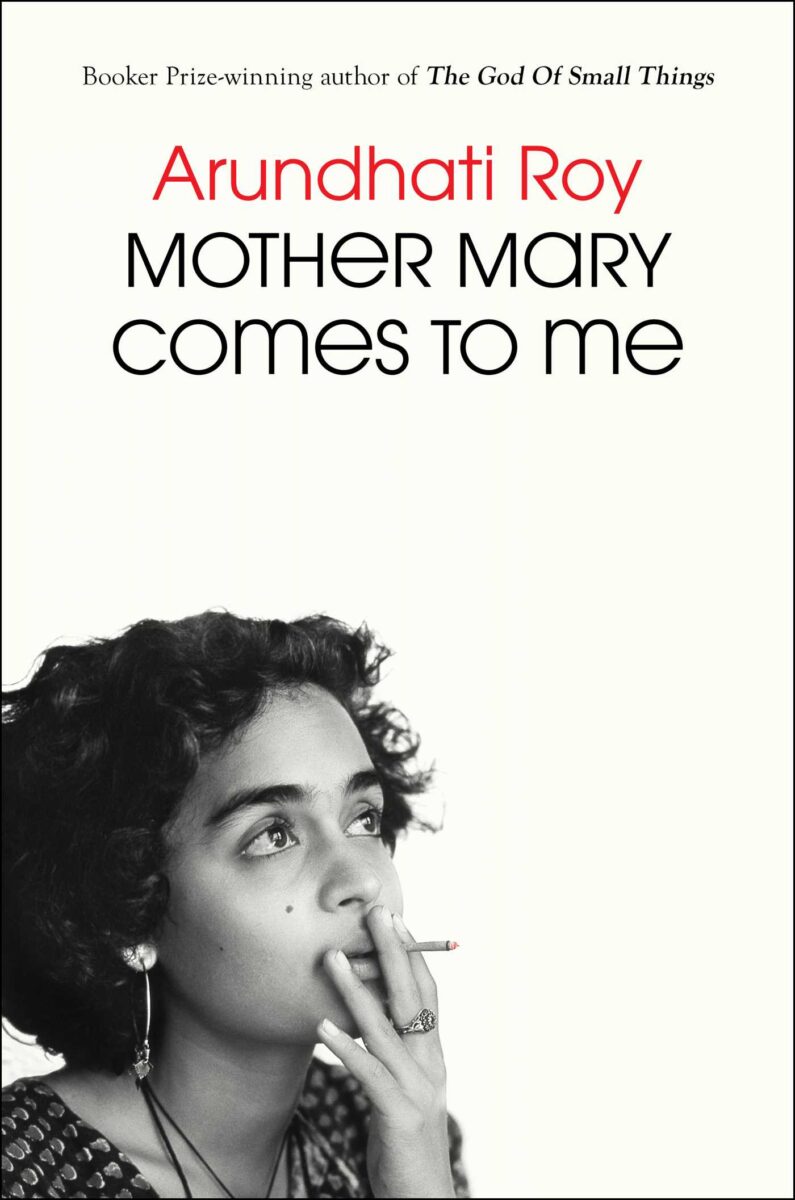
A raw and deeply moving memoir from the legendary author of The God of Small Things and The Ministry of Utmost Happiness that traces the complex relationship with her mother, Mary Roy, a fierce and formidable force who shaped Arundhati’s life both as a woman and a writer.
Mother Mary Comes to Me, Arundhati Roy’s first work of memoir, is a soaring account, both intimate and inspirational, of how the author became the person and the writer she is, shaped by circumstance, but above all by her complex relationship to the extraordinary, singular mother she describes as “my shelter and my storm.”
“Heart-smashed” by her mother Mary’s death in September 2022 yet puzzled and “more than a little ashamed” by the intensity of her response, Roy began to write, to make sense of her feelings about the mother she ran from at age eighteen, “not because I didn’t love her, but in order to be able to continue to love her.” And so begins this astonishing, sometimes disturbing, and surprisingly funny memoir of the author’s journey from her childhood in Kerala, India, where her single mother founded a school, to the writing of her prizewinning novels and essays, through today.
With the scale, sweep, and depth of her novels, The God of Small Things and The Ministry of Utmost Happiness, and the passion, political clarity, and warmth of her essays, Mother Mary Comes to Me is an ode to freedom, a tribute to thorny love and savage grace—a memoir like no other.
Keep track of your progress and make your predictions for the winning titles using our Finalist Checklist!